
A policy-changing project. Redesign KYC flow for better fulfilling additional requirements that successfully improve user efficiency.
My Role: UX/UI Designer
Duration: Nov'20 – Feb'21 (4 months)
Cooperated with the 2 PM and MKT team
As required by AMLO and BoT*, our users who didn’t complete full KYC before 30th Jun 2019, will no longer be allowed to use e-wallet related services. It brings about losing the number of old users and higher barriers for new users. We aim to enhance the existing KYC flow and add the privacy-aware concept to avoid customer churn.
*In Thailand, the financial institutions need to comply with both the KYC process under AML law (anti-money laundering law) and the criteria issued by the BoT (Bank of Thailand) as the supervising regulator.

Based on the customer weekly report, we point out some common frictions from 33 valid feedbacks about the current KYC flow. Here are top 5 of the worst experiencing.
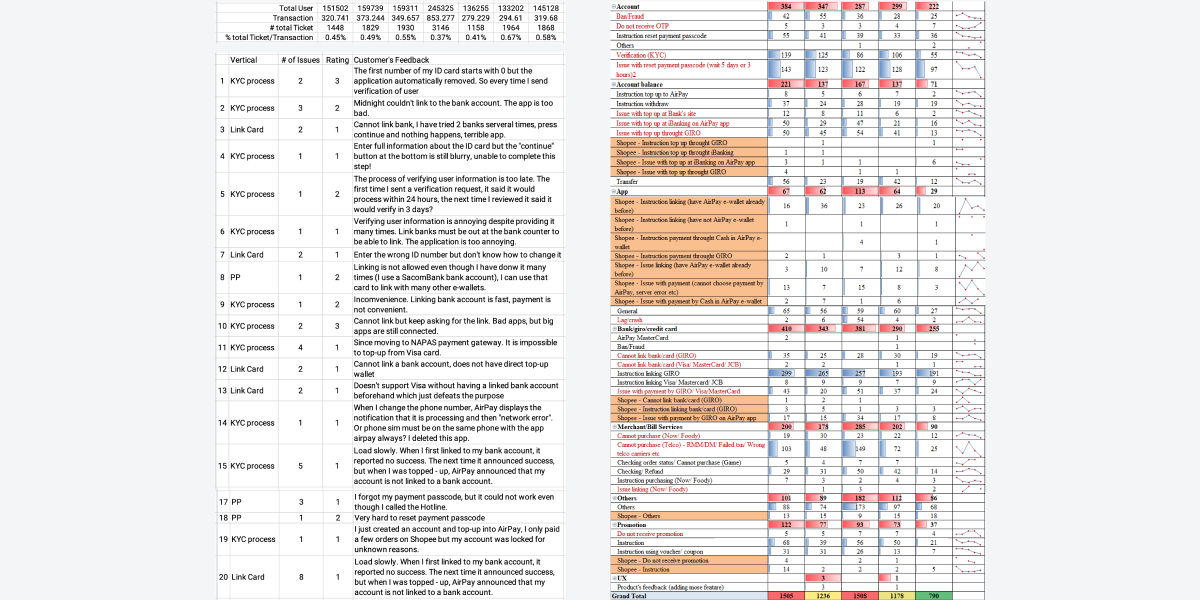
People feel unsafe to provide sensitive personal data. They are afraid of their information misappropriated by the platform.
The steps were fragmented by disorganized information structure which result from the superimposed KYC requirements over time. The user is overwhelming when seeing 6 steps upon entering the flow.
When inputting the form, the top-fixed illustration and the popping up keyboard cut down the most visible area and makes it hard to fill.
Some users accuse the platform asked the passcode to access their bank; some complain they don’t receive the passcode for payment; and some feedback their login passcode was changed by any. It seems user unclear what the passcode they create for.
Though several types of ID documents are allowed for KYC, a higher barrier for non-citizen ID card comes from the new policy. Some users asked to drop off their previous application and re-apply it with their citizen ID card.
New regulation is a big change to the product. PM arranged a sharing meeting with the finance and marketing team, in order to build up this project from different perspectives and process strategic thinking. Here are 3 major purposes of enforcement rules.
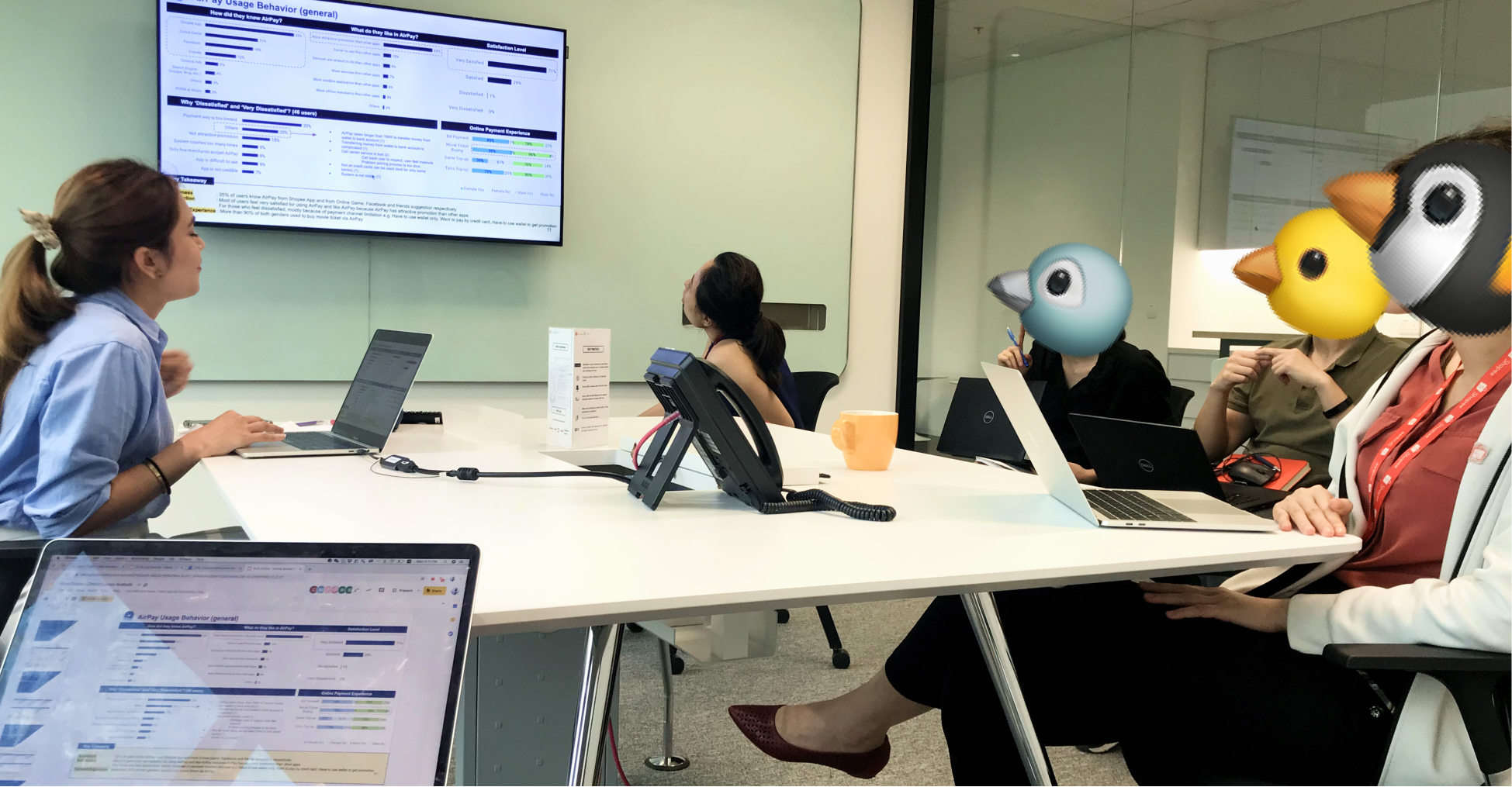
Its purpose is to protect both provider and customer. The terms delimit the scope of rights and obligations.
Its purpose is to assess customers suitability, along with the potential risks of illegal intentions towards the business relationship.
Its purpose to secure customers' information from ID theft who assumes others' identity to profit illegally and make sure the intention of consent from user while making an action.
Marketing indicated that the financial of digital transformation currently picks up steam in Thailand. ToB announced a guideline for application of biometrics tech in financial services. According to the user on-boarding comparison through the feature inventory, more and more competitors update the KYC process with biometrics tech application.
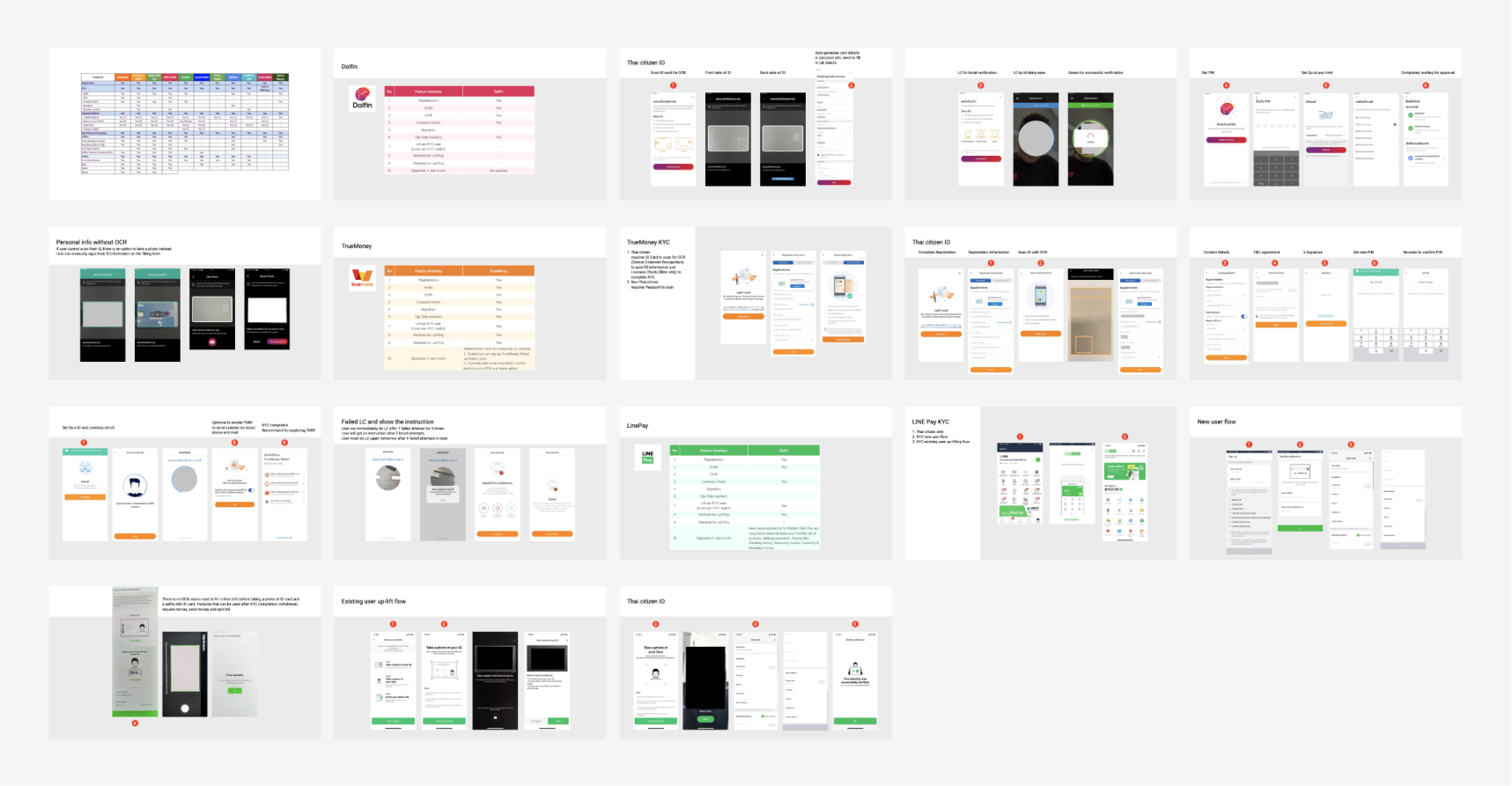
It is a challenge to trade-off fewer steps and don't place overload information on a single page. To make process easier, we like to apply OCR or faicail recognition, and it gives an advantage to reducing the manual review workload. However, it takes time to build an accurate and secure module with anti-spoofing detects. Therefore, we set a long term plan to iterate the KYC flow gradually.
Looking through the exsisting flow, the data funnel shows the critical step where the users drop off is on the first page. Recall to the friction experience that user feedback, we got on reorganizing the structure, addressed to the usability issue about form design, and hold a privacy-aware design mindset.
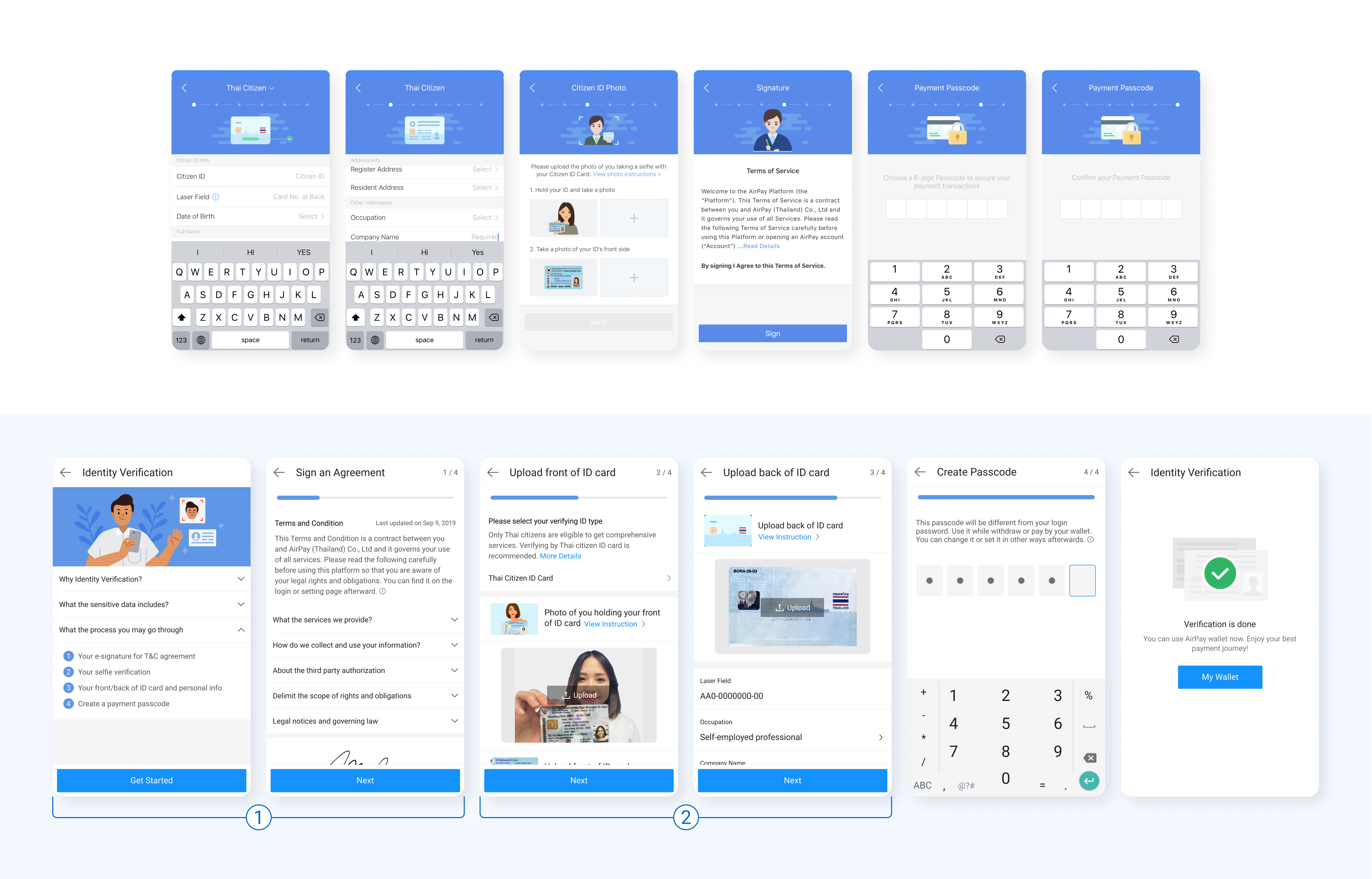
In order to earn trust among users a little, we brief the reason why needs to verify their identity and how we process it. We try to call attention to the value exhange and drive user to opt in.
Also, the whole process should base on user consent. We up front the T&C to make it formal and cautious.
The existing flow separates the form inputting and photo uploading into 2 steps. Think out the scalability for applying OCR and the flexibility of Liveness Check module further, here we group the relative information by back and front side of identity instead of the way of interaction.
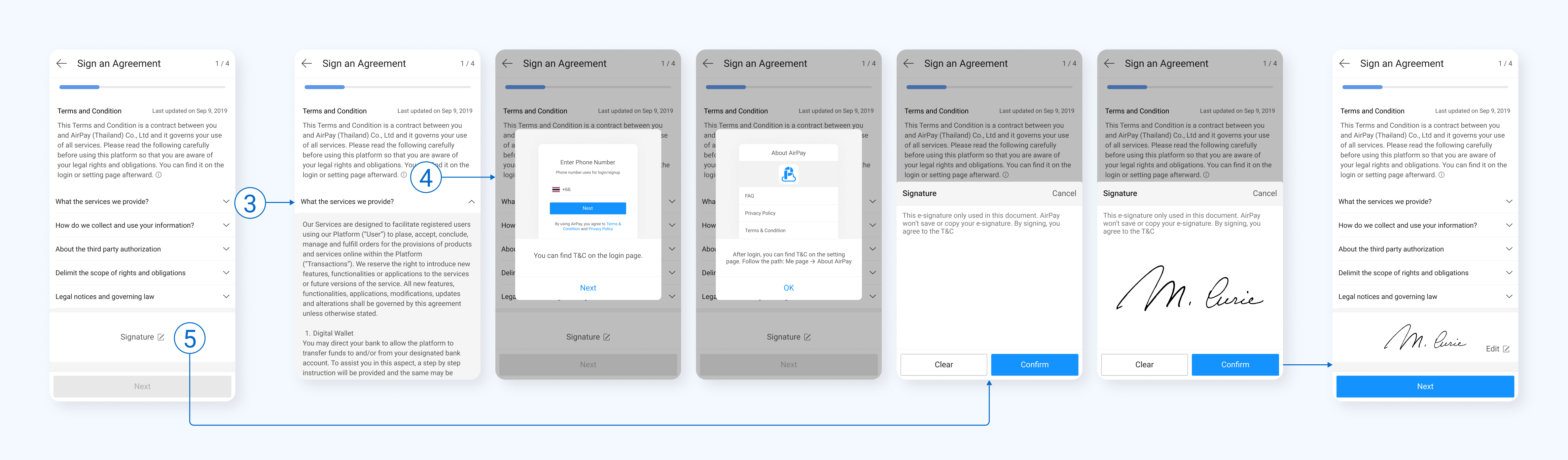
I have empathy with ignoring or skipping the T&C while seeing a bunch of words. We encourage users to read and achieve comprehension for making a real choice. Here we list down the main points with progressively exposing details. User can be well-informed and understand the benefit from reading T&C.
Let user know where they can get back the T&C after going through the KYC process anytime.
E-signature is a formal way of agreement required by government. It is important to reduce the concerns and let user understand how the proposition we promised to deliver them be impacted.
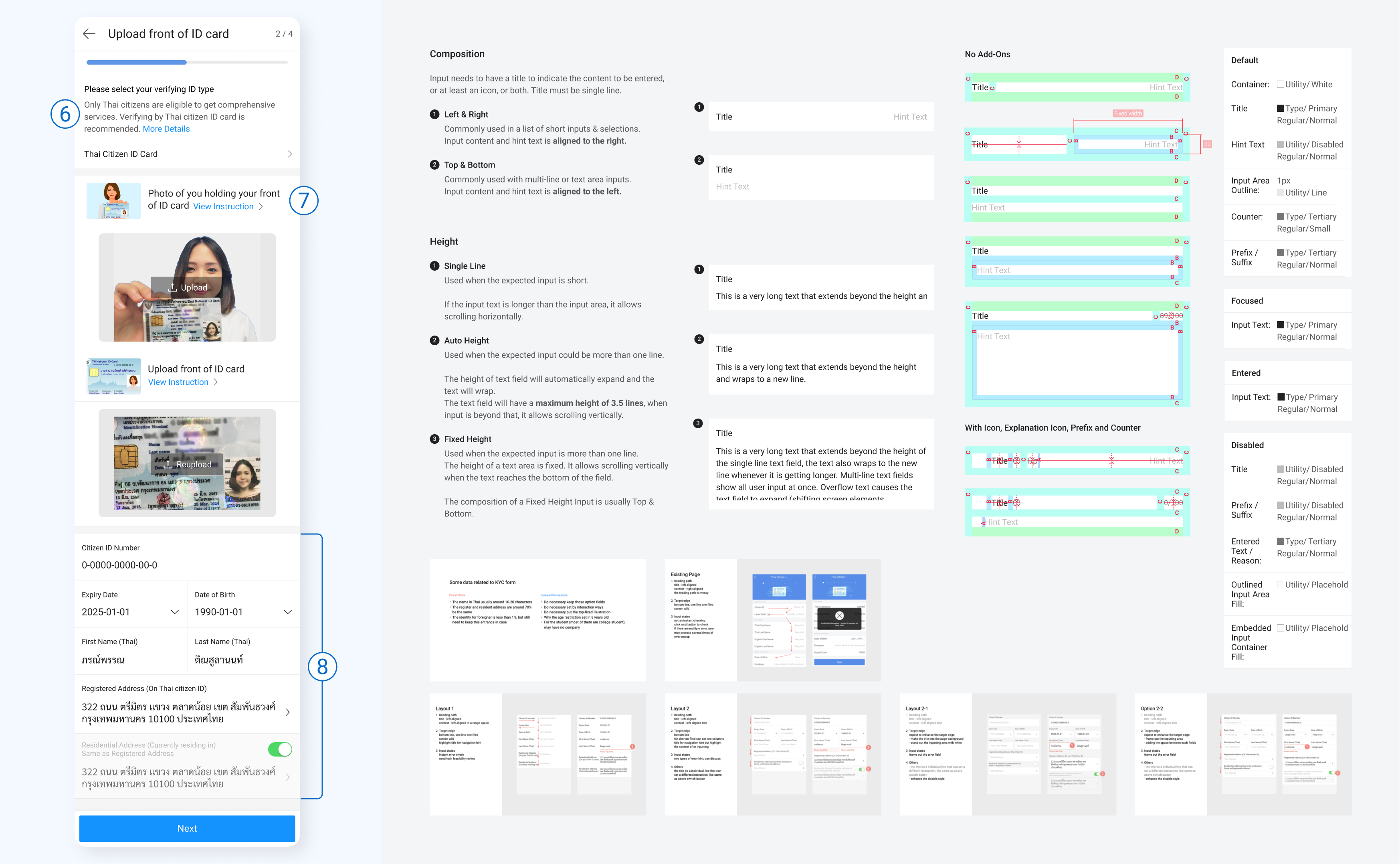
Instead of putting the selector on an ambiguous title, here cearly highlight that we recommend for verifying by citizen ID card and the reason.
E-signature is a formal way of agreement required by government. It is important to reduce the concerns and let user understand how the proposition we promised to deliver them be impacted.
The challenge of form design is the restriction from the system design guideline. Only one type of input field, a left-aligned field label, is commonly used in our APP. My concern is that the narrow screen leaves very little space left for the field itself when the label is in front of it. Also, it makes the eye-moving across the page in Z pattern, increasing cognitive time.
I made a compromise first but kept thinking of another option of the label above the field. I explored it and gathered feedback on it by prototyping. I got positive comments about its usability. I shared the result with the design guideline team and got aligned with adding this new type of input component into the library.
It takes time to finalize the design component, like back and forth adjusting the font size, text colour, padding, infield or outfield labels to decide the one with good recognizable target edges and modest space. And most important, access existing pages and utilized them with the new field design. We plan the timeline well to fit in the KYC project schedule.
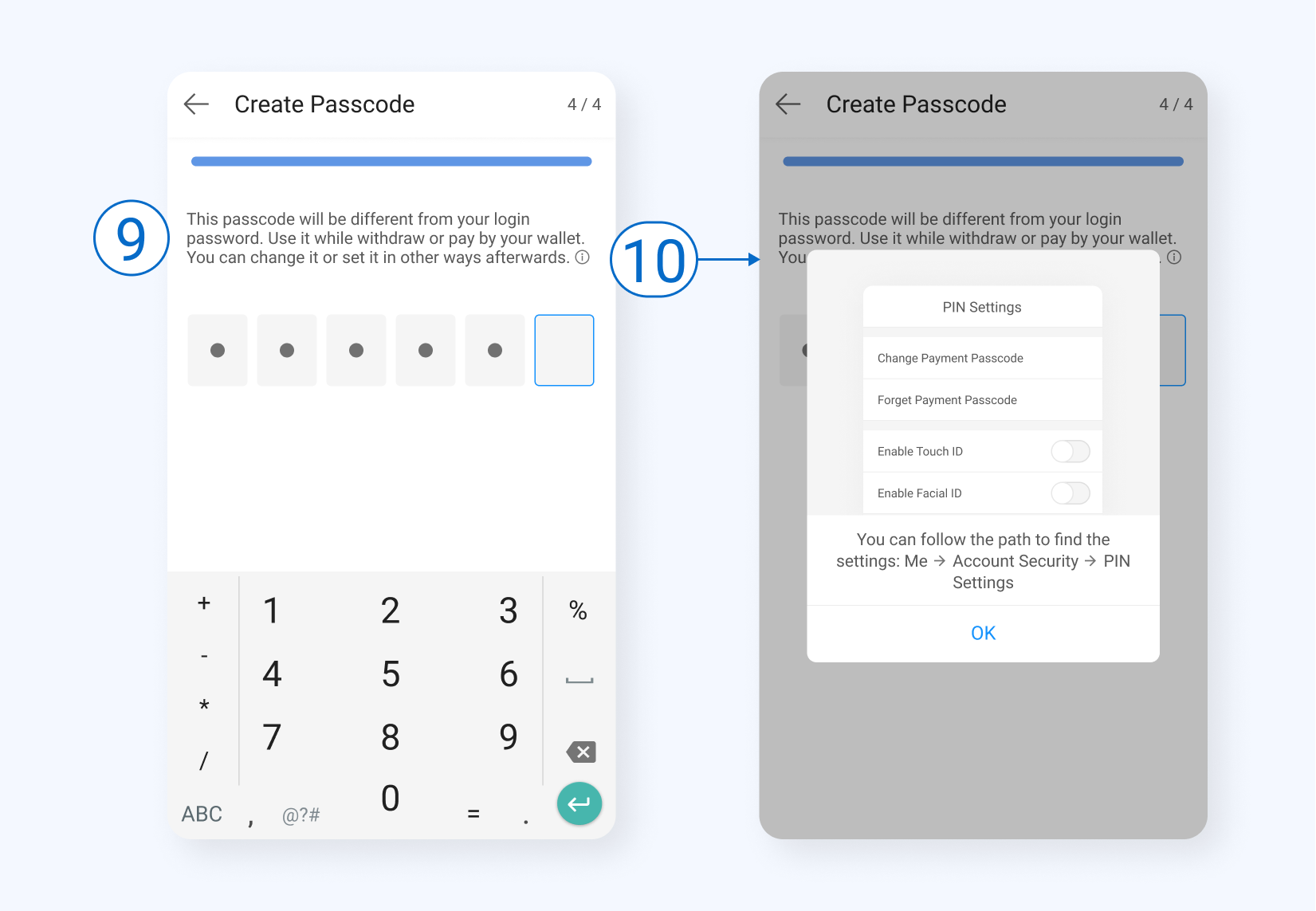
According to user feedbacks, some of them misunderstood the passcode. They thought we are asking for the one of their bank account. So we clarify the purpose here.
Besides, users having the right can browse, change and delete once consent is granted. The tip guides them where can reset. Also, the advanced setting can enable the passcode by pattern or touch ID.
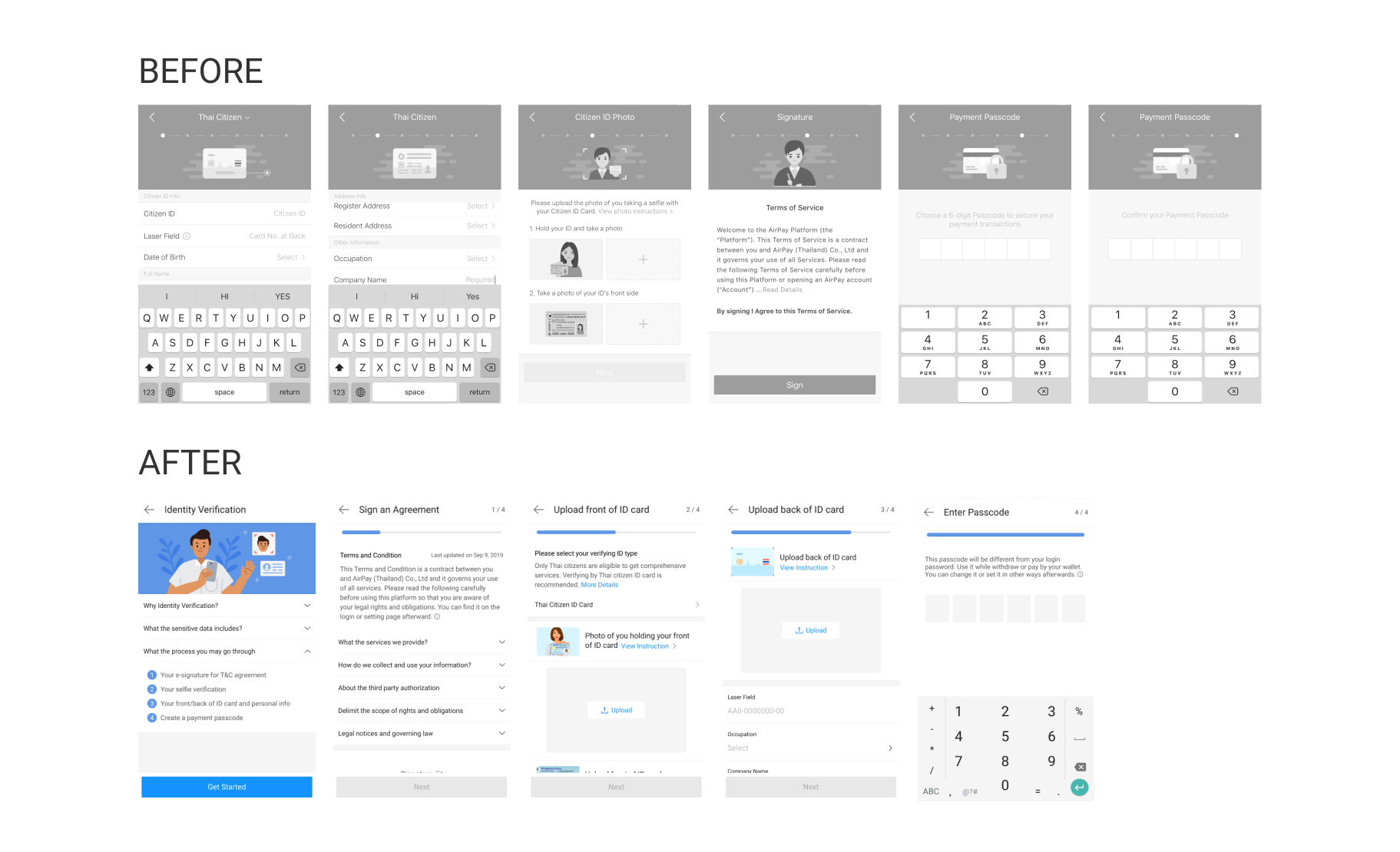
As form filling is a task-based design, I'd like to conduct a usability test to check if the design is matching expectations. There are the current and redesign form prototypes, each with 3 brand new testers, evaluate 3 metrics - effectiveness, efficiency, and cognitive loading. As the fact-based result, shows the improvement of form filling and makes us confident in a new design
Completion rate (total successful/tasks*%)
66%
84%
Time based scores (goals/sec)
0.5
1.04
PURE scores (Easy-1, General-2, Difficult-3)
7
4
Facial recognition is a tech capable of identifying a person from a digital image. To well balance security and agility in the identification process, we apply facial recognition to intelligently authenticate if the user is real instead of manual check by operators.
Optical character recognition (OCR) is a tech that enables to convert documents or images captured by a digital camera into editable data. Due to the identity information are contained on ID card, OCR can perfectly facilitate form filling. Identity information can be easily caught from ID photo instead of input one by one.
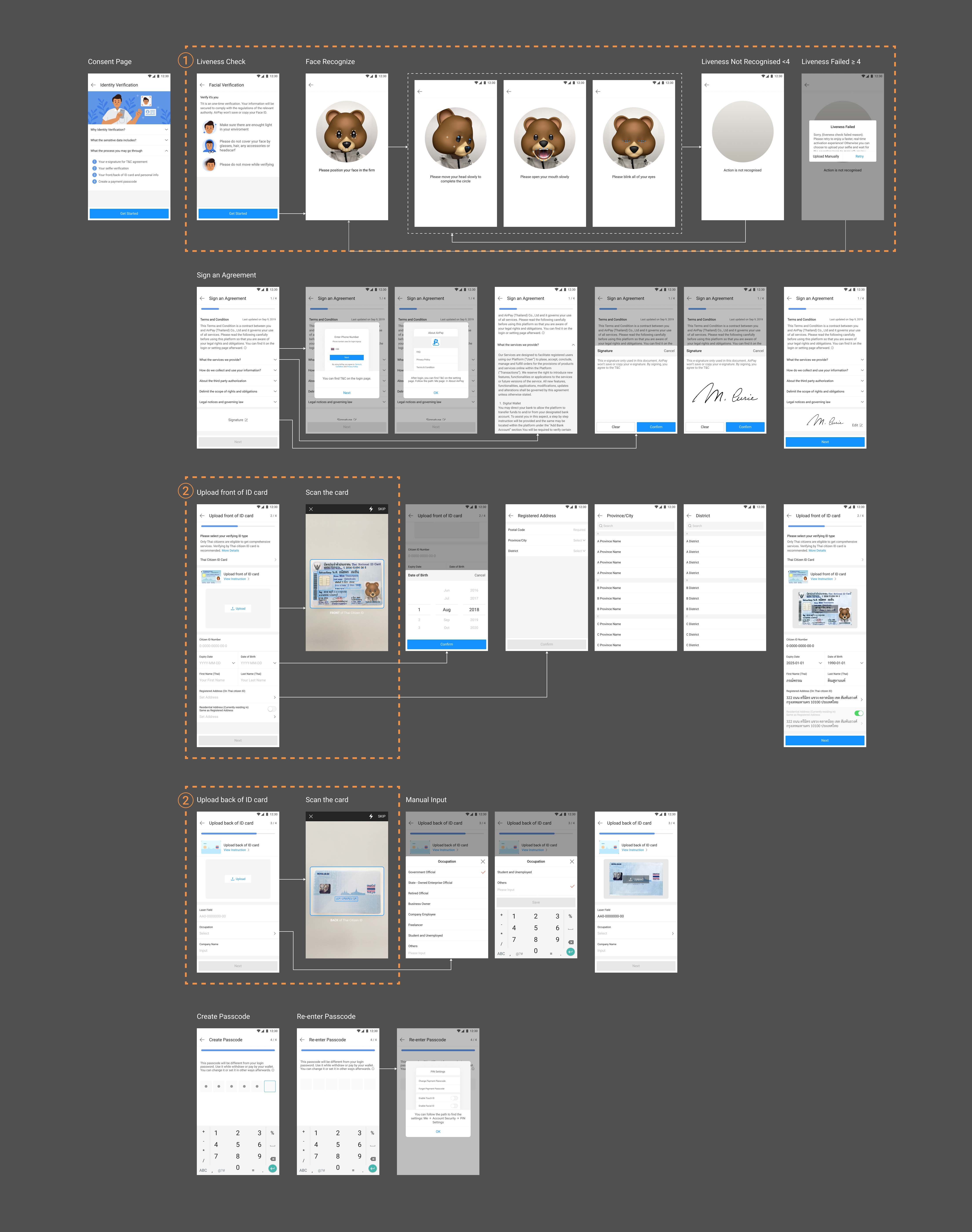
During each phase, there are many intermittent minor iterations raised from everywhere. For example, changing the way of interaction or adjusting the features here and there to meet regulation. Or making flexible information structure for sharing between multiple countries. Or applying new tech of liveness detection that improves its efficiency and robustness in different scenarios by using face flashing instead of face motion.
That makes the KYC project be the most challenging design for me. It is easy to satisfy a specific requirement at that moment. However, over time without considering all factors under one principle, the flow became too patched to maintain and utilize. The conflicting design intentions had crept in.
I learned over a messy period and several unsuccessful versions. Here are some workable methods that I made to deal with:
Record the change logs and the small goal for each version. It is good to review the changes follow the roadmap and have context for further improvements.
Different PMs worked on their individual country KYC. To enhance the consistency across the products, which can reduce unnecessary efforts and maintenance, I summarize the possible shareable module, and sync up to PMs.
It is worth taking time to patiently observe the performance of users and see the actual effects from many factors. Both qualitative and quantitative research helps us make decisions for valid improvements.

